

There are moments in life that are so beautiful, yet so ordinary, that they often pass unnoticed. Imagine walking through a quiet park on a warm spring morning. Above you, sunlight filters gently through the branches of ancient trees, creating dancing patterns of light and shadow on the ground. You stop for just a moment, captivated by something you cannot quite describe. It feels peaceful, almost magical.
In English, we might call it “sunlight through trees,” but the Japanese language has a single word for this experience: Komorebi (木漏れ日).
Komorebi literally describes the sunlight that filters through the leaves of trees. While it may seem like a simple description of nature, the word carries a much deeper meaning. It reflects a uniquely Japanese appreciation for fleeting beauty and the quiet moments that make life meaningful.
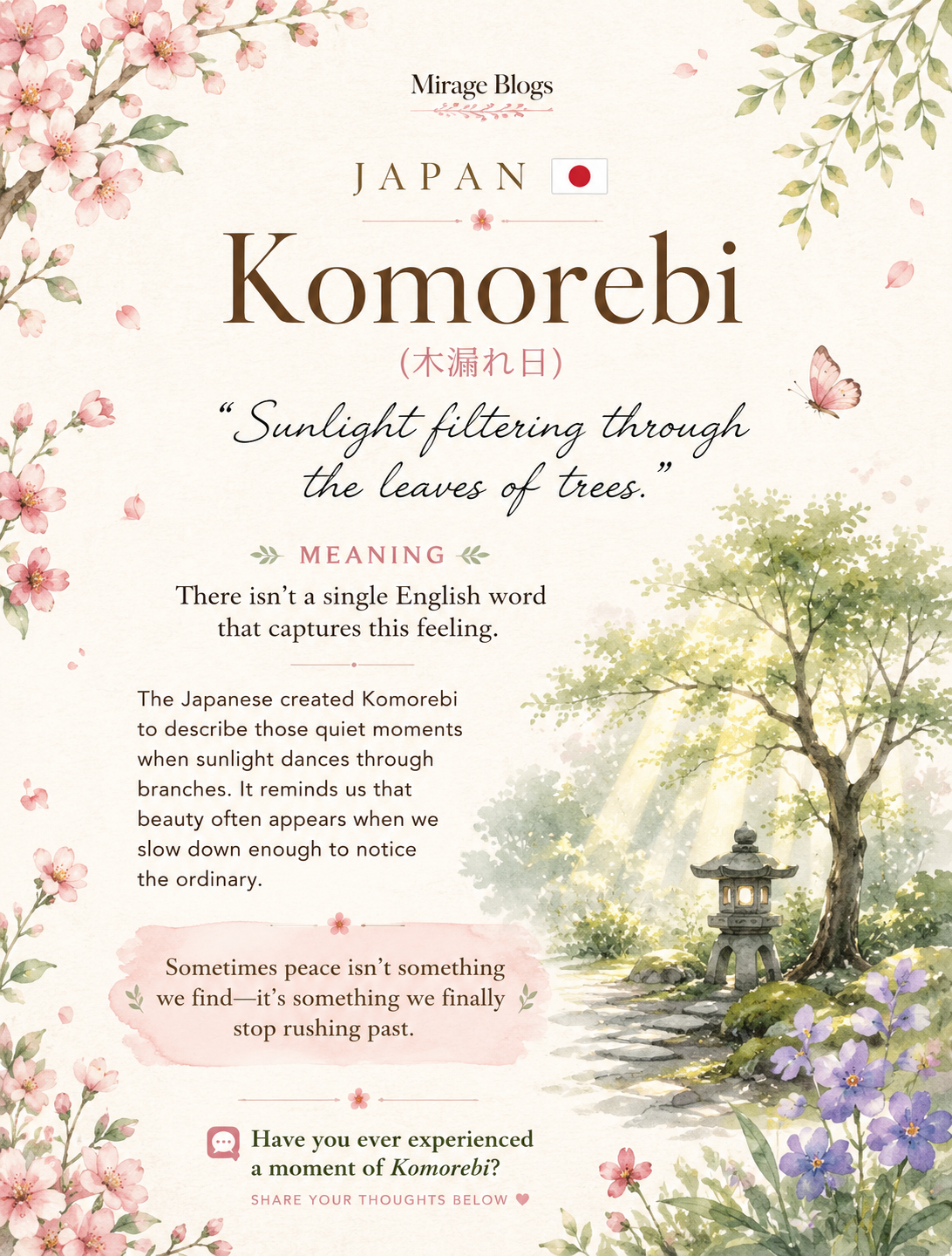
Table of Contents
A Language That Notices the Unnoticed
One of the fascinating aspects of Japanese culture is its ability to give names to experiences that many people feel but rarely express. Rather than viewing language as merely a tool for communication, Japanese often captures emotions, seasons, and subtle moments that might otherwise go unnoticed.
Komorebi is one of those words.
It reminds us that beauty isn’t always loud or dramatic. Sometimes it appears in the soft glow of morning light, the gentle movement of leaves in the wind, or the peaceful silence of a walk through nature.
These are moments that cannot be rushed or manufactured. They simply happen—and only to those who are paying attention.
More Than Just Sunlight
At first glance, Komorebi might seem like nothing more than a poetic description of nature. Yet its popularity around the world stems from what it symbolizes.
Life today is incredibly fast-paced. Notifications compete for our attention. Our schedules are packed. We often move from one task to another without ever pausing to appreciate where we are.
Komorebi invites us to do the opposite.
It encourages us to slow down long enough to notice the extraordinary hidden within the ordinary.
The sunlight filtering through leaves has always existed. The question is whether we take the time to see it.
A Reflection on Mindfulness
Although Komorebi isn’t a religious or philosophical term, it naturally aligns with the practice of mindfulness.
Mindfulness teaches us to become fully present in the current moment instead of constantly worrying about the future or dwelling on the past. Komorebi represents one of those present moments—a reminder that peace often exists around us if we choose to notice it.
You don’t need a perfect vacation, a luxury lifestyle, or extraordinary circumstances to experience beauty.
Sometimes all it takes is a quiet afternoon beneath a tree.
Finding Your Own Komorebi
You don’t have to travel to Japan to experience Komorebi.
It might happen while walking your dog through a local park.
It might appear during an early morning hike.
Perhaps you’ll notice sunlight streaming through your kitchen window, casting beautiful patterns across the table.
These moments are gifts that cost nothing, yet they have the power to calm our minds and remind us that life contains quiet wonders every single day.
In a world that often encourages us to seek bigger, faster, and more exciting experiences, Komorebi gently whispers that happiness can also be found in stillness.
Why Words Like Komorebi Matter
Learning words from different cultures expands more than our vocabulary—it broadens our perspective.
Every language reflects the values and experiences of the people who speak it. The existence of a word like Komorebi reminds us that Japanese culture places great importance on observing nature, appreciating impermanence, and finding beauty in everyday life.
Perhaps that is why this simple word has resonated with millions of people around the world.
It gives a name to a feeling many of us have experienced but never knew how to describe.
A Gentle Reminder
The next time you’re outside, pause for a moment.
Look up.
Watch the sunlight dance through the branches.
Listen to the breeze moving through the leaves.
Take a slow breath.
You may discover that some of life’s most beautiful moments are not the grand milestones we spend years chasing, but the quiet, ordinary moments that have been waiting patiently for us all along.
That is the gift of Komorebi.
Sometimes peace isn’t something we have to search for.
Sometimes it’s simply something we finally stop long enough to notice.
Reflection Question
Have you ever experienced a moment of Komorebi? Share your story in the comments. Sometimes, the simplest moments become our most treasured memories.