
“Write it on your heart that every day is the best day in the year.” — Ralph Waldo Emerson
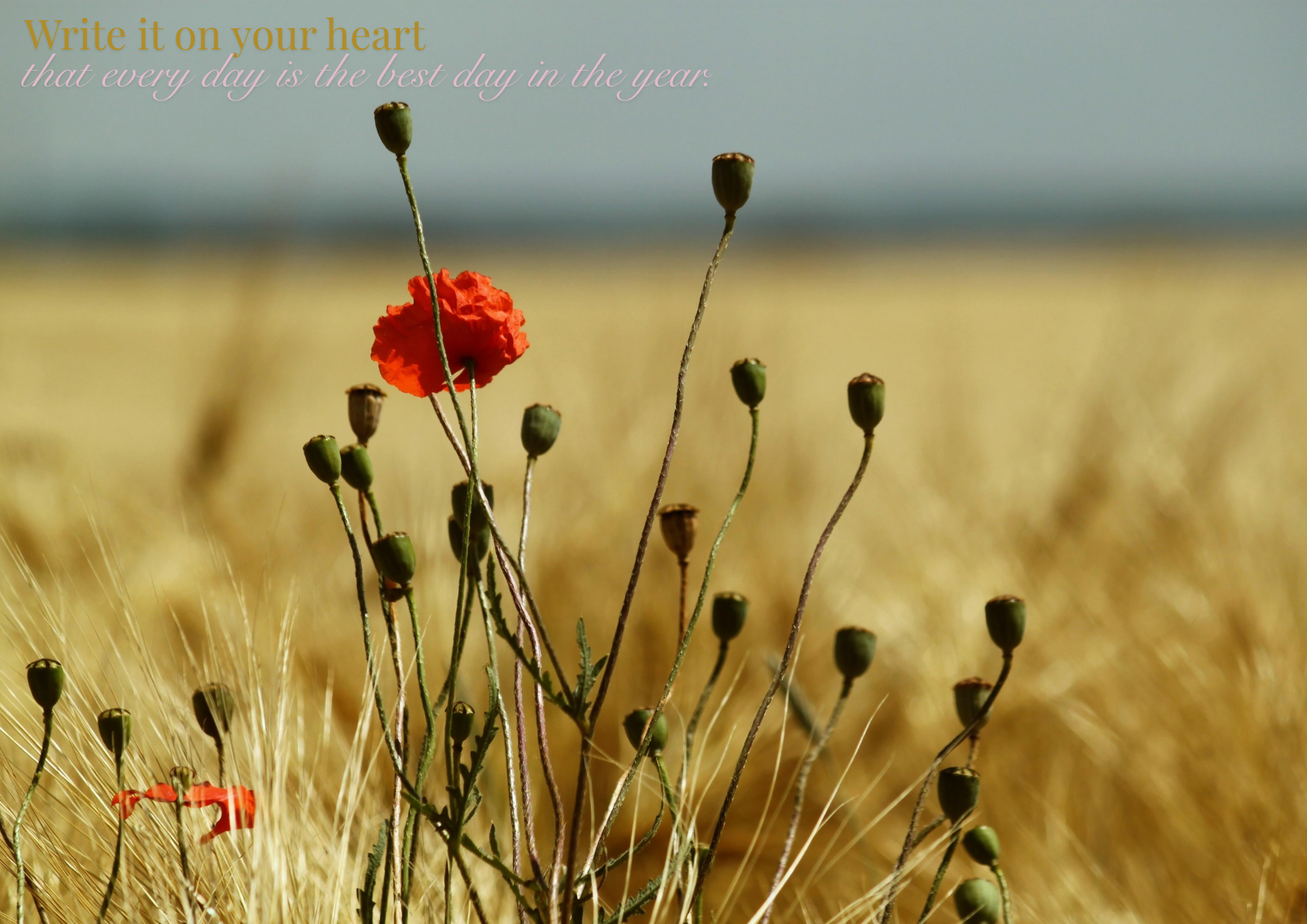
This powerful line invites us to make a deliberate, internal commitment: not merely to hope that good days will come, but to decide that today, whatever it holds, is already worthy of being called the best. Emerson does not suggest denying hardship or pretending that pain does not exist. Instead, he challenges us to anchor our perspective in something deeper than circumstance. To “write it on your heart” means to engrave it into our identity, to make it a guiding belief rather than a fleeting thought.
At its core, this quote speaks about attitude, the quiet but transformative power of choosing how we interpret our lives.
Most people allow circumstances to dictate their emotional climate. If things go well, they are happy. If things fall apart, they feel defeated. This reactive way of living places happiness at the mercy of external events: the job offer, the bank balance, the diagnosis, the weather, the opinions of others. But Emerson’s message suggests a radical alternative that happiness is not found in events, but in perspective.
To decide that every day is the best day does not mean every day feels easy. Some days bring loss, disappointment, stress, or uncertainty. Yet even in those moments, there remains opportunity: the opportunity to grow, to learn patience, to strengthen resilience, to show kindness, to deepen faith, or to discover inner strength that would otherwise lie dormant.
 A positive attitude is not naïve optimism. It is disciplined thinking.
It is waking up and consciously choosing gratitude over complaint.
It is looking at a problem and asking, “What is this teaching me?”
It is experiencing delay and deciding to practice patience rather than frustration.
It is facing failure and deciding to extract wisdom rather than shame.
When Emerson encourages us to write this truth on our hearts, he implies permanence. Temporary motivation fades. Emotional highs pass. But a belief etched into the heart becomes a compass. It directs reactions before they fully form. It steadies the mind when chaos tries to take over.
There is also a subtle but profound shift in identity here. When someone believes that each day is the best day, they stop living in constant comparison, comparing today to a better yesterday or waiting for a brighter tomorrow. They stop postponing joy. Many people live in “when-then” happiness: When I get the promotion, then I’ll be happy. When I find the right relationship, then I’ll relax. When things settle down, then I’ll enjoy life. But life rarely settles down completely. There is always something unresolved.
Deciding that today is the best day interrupts this cycle. It says: I will not wait for perfect conditions to permit myself joy.
This mindset builds resilience. If every day is the best day, then even a difficult day holds value. Pain becomes part of a meaningful journey instead of an unfair interruption. Challenges become chapters, not conclusions. Such a perspective transforms adversity from something that happens to you into something that works for you.
Moreover, a consistently positive attitude has a contagious effect. People who choose joy despite circumstances create emotional stability in their environment. They become sources of encouragement. They model strength without denial, optimism without illusion. Their happiness is not loud or forced but it is steady. And that steadiness inspires others.
Importantly, deciding to be happy does not mean suppressing real emotions. It means acknowledging them without surrendering to them. You can feel sadness and still believe the day has purpose. You can experience stress and still practice gratitude. You can endure hardship and still choose hope. Happiness in this sense is not constant laughter, it is an underlying trust that life, even in its imperfection, is good.
When you wake each morning and quietly affirm, “This is the best day in the year,” something shifts internally. Your attention sharpens toward what is working instead of what is missing. You become more present. You notice small joys: sunlight through a window, a meaningful conversation, progress on a goal, a moment of stillness. These details accumulate. Over time, they build a life that feels rich, not because it is flawless, but because it is fully appreciated.
Ultimately, Emerson’s words remind us that happiness is less about what happens and more about who we decide to be. Circumstances will rise and fall. Seasons will change. Success and struggle will alternate. But attitude that is within our control.
To write it on your heart that every day is the best day in the year is to take ownership of your inner world. It is to say: I refuse to let temporary conditions dictate permanent despair. It is to live intentionally, gratefully, courageously.
And when practiced consistently, this decision does something remarkable, it turns ordinary days into extraordinary ones, not by changing the events themselves, but by transforming the way we experience them.